 Back to Blog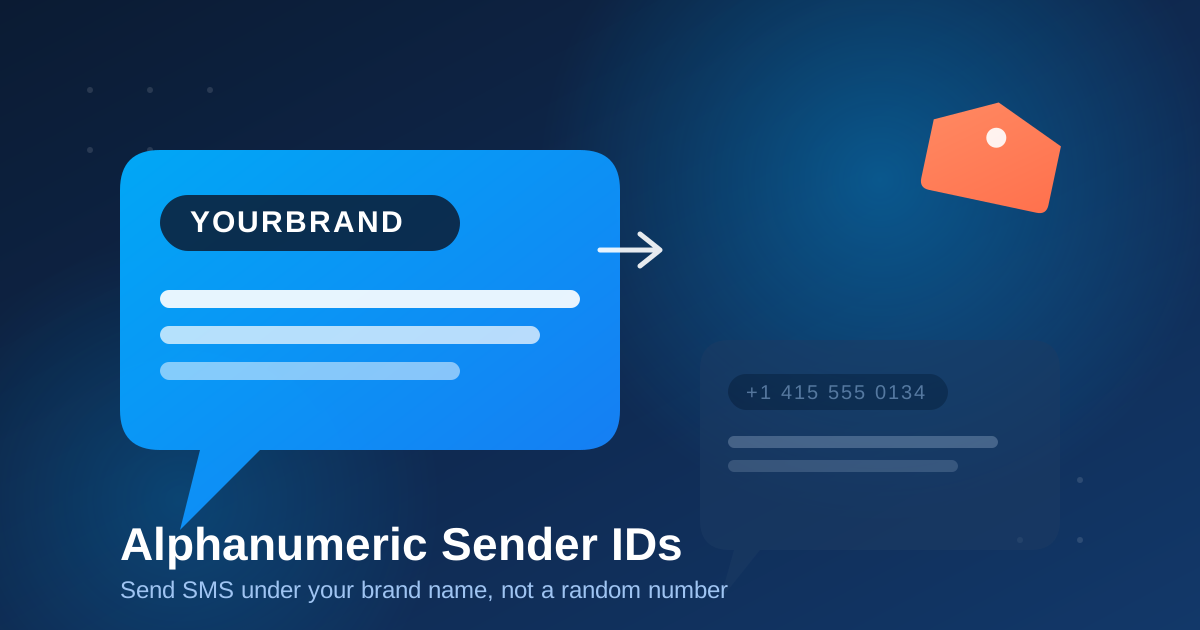
Picture the last SMS you got from a business you didn’t recognize. Did you open it, or did you assume it was spam and swipe it away? That split-second judgment call happens to your customers too, every single time you send a campaign from a plain phone number. Alphanumeric sender IDs solve this by putting your actual brand name where the number used to be.
Instead of a message arriving from “+1 415 555 0134” or some other string of digits nobody remembers, it shows up from “SHOUTOUT” or whatever short name your business goes by. No app to install, no contact to save, just your name sitting at the top of the message the moment it lands.
What’s actually happening under the hood?
An alphanumeric sender ID replaces the numeric “from” field on an SMS with a text string, typically your business name or a recognizable abbreviation of it. ShoutOUT Engage supports this directly in the campaign composer: you set the sender ID once, and every message you send through that channel carries it. There’s no separate number to provision, no toll-free application to file, and no waiting period tied to physical number ownership. It’s a naming layer on top of the existing SMS infrastructure, which is part of why it’s faster to get running than a dedicated number.
That said, the two aren’t competitors so much as different tools for different situations. A dedicated mobile number is useful when you want two-way conversations, since customers can reply directly to it. An alphanumeric sender ID is one-way by nature (recipients can’t text back “SHOUTOUT”), but it wins on brand recognition, especially for announcement-style or promotional sends where you’re not expecting a reply.
Why does the sender name change how people react?
Because in SMS, the sender field is the entire spam-or-legitimate judgment, made in about two seconds. SMS lands in the same inbox as messages from friends, family, banks, and delivery services. There’s no spam folder to catch the noise before it hits the lock screen. That means the sender identity is doing a lot of work in a very small space, often just the couple of seconds before someone decides to read or dismiss.
A brand name sitting in the sender field short-circuits that hesitation. Recipients don’t have to open the message to guess who sent it. They already know, because it’s spelled out in the one place they look first. This has a few knock-on effects worth calling out:
- Higher read rates, since a recognizable name reduces the “is this spam” filter people apply instinctively to unknown numbers.
- Stronger recall over repeated sends, because the same name shows up every time, reinforcing the association between your brand and the message.
- A more professional first impression, particularly for businesses whose only prior SMS touchpoint with a customer was an unfamiliar shortcode or long number.
- Less confusion across multiple campaign types, since a promotional blast, a reminder, and a service update can all carry the same trusted name even though the content differs.
None of this requires the recipient to do anything differently. It’s a passive trust signal, sitting quietly in a field most people don’t even realize they’re reading, but absolutely register.
Where alphanumeric sender IDs make the most sense
Not every use case wants a two-way conversation. Order confirmations, appointment reminders, promotional announcements, and one-time passcodes are all fundamentally broadcast messages: the business is telling the customer something, and a reply isn’t expected or needed. These are exactly the situations where an alphanumeric sender ID earns its keep, since you get the brand recognition benefit without giving up anything you were actually using.
Retailers running seasonal promotions, service businesses sending appointment nudges, and SaaS products sending transactional alerts all fall into this bucket. If your SMS program is mostly outbound updates rather than back-and-forth support conversations, this is very likely the right sender configuration for you.
It’s also worth noting that sender IDs support multiple languages and character sets, so businesses operating across different markets aren’t boxed into a single alphabet or naming convention. A brand with operations in more than one region can keep its identity consistent without compromising on how the name reads locally.
Setting it up without slowing down your campaigns
Because there’s no physical number tied to an alphanumeric sender ID, the setup path is generally lighter than provisioning a dedicated toll-free or local number. You configure the sender name as part of your SMS channel settings, and from that point forward every outbound campaign that uses that channel automatically carries the branded identity. There isn’t a separate step per campaign, which matters if you’re running frequent sends and don’t want branding to be something you have to remember to configure every time.
You can turn this on today from the ShoutOUT Engage dashboard, set your sender name once, and let it carry through every SMS campaign you launch from that point forward.
A small change with an outsized effect
It’s easy to underestimate how much a sender name matters, mostly because it’s such a small piece of real estate compared to the message body itself. But that’s exactly why it’s worth getting right: it’s the first thing recipients see, it takes zero extra effort on your part once it’s configured, and it directly shapes whether a message gets read or ignored in the first place.
If your SMS campaigns are currently going out from an anonymous number, switching to an alphanumeric sender ID is one of the lowest-effort changes you can make that has a real, measurable effect on how your messages are received. It won’t rewrite your copy or change your offer, but it will change whether people trust what they’re reading enough to keep going.
FAQ
Can customers reply to an alphanumeric sender ID?
No. An alphanumeric sender ID is one-way by design, recipients can’t text back a name like “SHOUTOUT”. If you need two-way conversations, ShoutOUT Engage’s dedicated mobile numbers are the better fit.
Does an alphanumeric sender ID require provisioning a phone number?
No. It’s a naming layer on top of existing SMS infrastructure, set once in your channel settings, with no toll-free application or number ownership wait involved.
Can I use an alphanumeric sender ID for multiple languages?
Yes. Sender IDs support multiple languages and character sets, so businesses operating in more than one market can keep a consistent brand identity across regions.
Which campaigns benefit most from an alphanumeric sender ID?
Broadcast-style sends where a reply isn’t expected, like order confirmations, appointment reminders, promotional announcements, and one-time passcodes, get the brand recognition benefit without giving up anything you were using a plain number for.
Do I need to set the sender ID separately for every campaign?
No. You configure the sender name once as part of your SMS channel settings, and every outbound campaign sent through that channel carries it automatically from then on.


 Capterra
 Software Advice
 G2 Crowd
 Gartner