 Back to Blog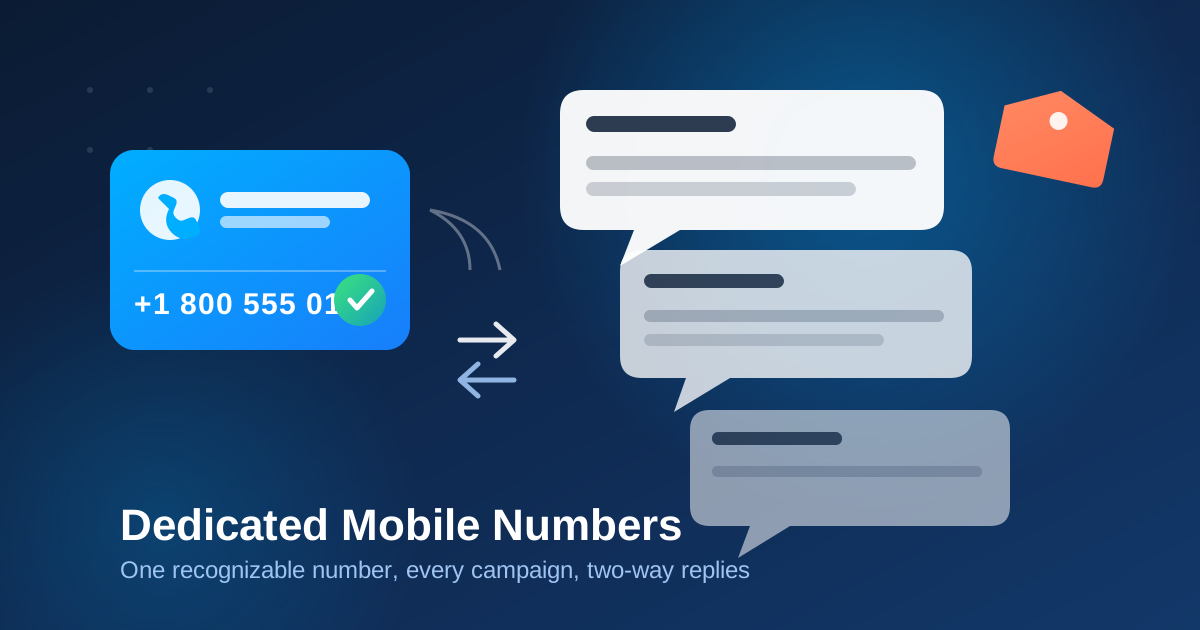
When a customer receives a text message from a number they do not recognize, they make a tiny decision before they even read the first word. Is this useful? Is this spam? Is this really from the brand I know? That moment is small, but it matters. SMS is direct, fast, and personal, which is exactly why the sender identity needs to feel steady.
Dedicated mobile numbers in ShoutOUT Engage are built for that job. A business can use a dedicated toll-free or local mobile number for SMS sending, giving campaigns a consistent sender number instead of a rotating or unfamiliar source. Over time, that number becomes part of the customer relationship. People see it, recognize it, and know where the message is coming from.
It is a simple feature, but it solves a very real marketing problem: trust does not scale well when every campaign looks like it came from somewhere new.
Why does the sending number matter?
Because it’s the first thing a recipient evaluates, before they’ve read a single word of the message. A good SMS campaign is not only about the offer, the timing, or the copy. It is also about context. If a salon sends appointment reminders, a school sends notices, or a retailer sends weekend offers, recipients should not have to guess who is speaking to them.
A dedicated number gives that communication a stable home. Instead of appearing as a one-off message from an unknown sender, every campaign can arrive from a number reserved for that business. ShoutOUT describes this as a dedicated toll-free or local mobile number, reserved exclusively for your business, so every text message arrives from a consistent, recognizable number your customers already trust.
That consistency is especially useful for brands that send more than one type of SMS. A customer may receive promotional campaigns, reminders, order updates, loyalty messages, or service notices. The message content changes, but the sender stays familiar. That familiarity helps customers connect the dots faster.
Local or toll-free: how do you pick?
Different businesses have different communication styles. Some want a local presence because their customer base is regional and relationship-driven. Others prefer a toll-free number because it feels official and easy to recognize across a wider audience. ShoutOUT Engage supports dedicated toll-free or local numbers, so the sender identity can match the way the business already shows up to customers.
That choice matters because SMS is close to the customer. It lands beside personal conversations, banking alerts, delivery updates, and family chats. If the sender identity feels random, even a well-written campaign can feel like noise. A steady number gives the message a better chance of being read in the right frame of mind.
You can turn this on today from the ShoutOUT Engage dashboard and use it as the consistent sender number behind your SMS campaigns.
Built for two-way conversations
Dedicated numbers are not only about outbound campaigns. ShoutOUT’s feature details also note that they work seamlessly with two-way messaging, so customers can reply directly. That is important because the best SMS communication does not always end at delivery.
A reminder may lead to a question. A promotion may lead to a request for availability. A service update may need clarification. When customers can reply to the same number that contacted them, the experience feels natural. They do not need to search for another channel or wonder where the conversation should continue.
For teams, this also changes how SMS can be used. It becomes less of a broadcast tool and more of a practical customer engagement channel. Campaigns can still go out in bulk, but the response path stays clear.
Concrete benefits for campaign teams
A dedicated mobile number is not flashy, which is probably why it is easy to underestimate. No confetti button, no dashboard wizardry, no dramatic product launch theatre. Just the thing customers notice when it is missing.
For marketing and customer engagement teams, the benefits are straightforward:
- Consistent sender identity: campaigns arrive from the same dedicated toll-free or local number.
- Better recognition: customers can learn to associate that number with your business.
- More trust at first glance: a familiar sender makes a message feel less random.
- Cleaner two-way messaging: recipients can reply directly when they need to respond.
- Stronger campaign continuity: reminders, offers, alerts, and follow-ups can all come from one recognizable place.
None of this replaces good content or sensible targeting. If the message is irrelevant, a familiar number will not magically save it. Alas, marketing still requires judgment. But when the campaign is useful, a consistent sender identity removes friction before the customer even reads the copy.
Where dedicated numbers fit in the campaign workflow
Think of the dedicated number as the front door for SMS engagement. It is not the whole house, but it affects every visit.
Before sending a campaign, a team usually spends time on audience selection, message wording, personalization, and timing. Those pieces shape what the customer receives. The sender number shapes how the customer receives it. It answers the quiet question, “Who is this from?” before the message has to do any heavy lifting.
That is especially valuable for recurring communication. A one-off promotional blast might survive a little ambiguity. Ongoing customer engagement should not have to. If your business sends regular SMS campaigns, a consistent number helps build a pattern customers can recognize.
A retailer might use the same number for seasonal offers and back-in-stock notices. A service business might use it for appointment reminders and quick updates. A community organization might use it for alerts and event messages. The use cases differ, but the principle is the same: the sender should feel familiar.
Trust is built through repetition
Brand trust is rarely created in one message. It is built through repeated, useful interactions. SMS can be one of the strongest channels for that because it is immediate and visible. But immediacy cuts both ways. If the sender looks unfamiliar, customers can dismiss the message just as quickly as they received it.
Dedicated mobile numbers help make repetition work in your favor. Customers see the same number, receive useful messages, and learn that it belongs to your business. Over time, that consistency becomes part of the experience.
This is not about making SMS louder. It is about making it clearer. A dedicated sender number gives every campaign a stable identity, supports replies when customers want to talk back, and helps businesses send messages that feel less like anonymous blasts and more like communication from a brand people already know.
For teams using ShoutOUT Engage, that is the real value: not just sending SMS, but sending from a place customers can recognize.
FAQ
Can I get both a toll-free and a local dedicated number?
ShoutOUT Engage supports dedicated toll-free and local mobile numbers, and the right choice depends on whether your customer base is regional or national; check the ShoutOUT Engage dashboard for the options available in your market.
Do customers need to save the number as a contact to recognize it?
No. Recognition builds through repeated exposure, since the same number appears on every campaign, reminder, and update, so customers learn to associate it with your business without any extra step on their end.
Can customers reply to a dedicated mobile number?
Yes. Dedicated numbers work seamlessly with two-way messaging, so recipients can reply directly to the same number that contacted them instead of being routed to a different channel.
Is a dedicated number required to send SMS campaigns at all?
No, but it’s the feature that gives campaigns a consistent, recognizable sender identity over time. Businesses that skip it risk looking like a different, unfamiliar sender on every send.
Does a dedicated number replace the need for good targeting and copy?
No. A familiar sender number reduces friction before the message is read, but it doesn’t substitute for relevant content or sensible audience targeting.


 Capterra
 Software Advice
 G2 Crowd
 Gartner