 Back to Blog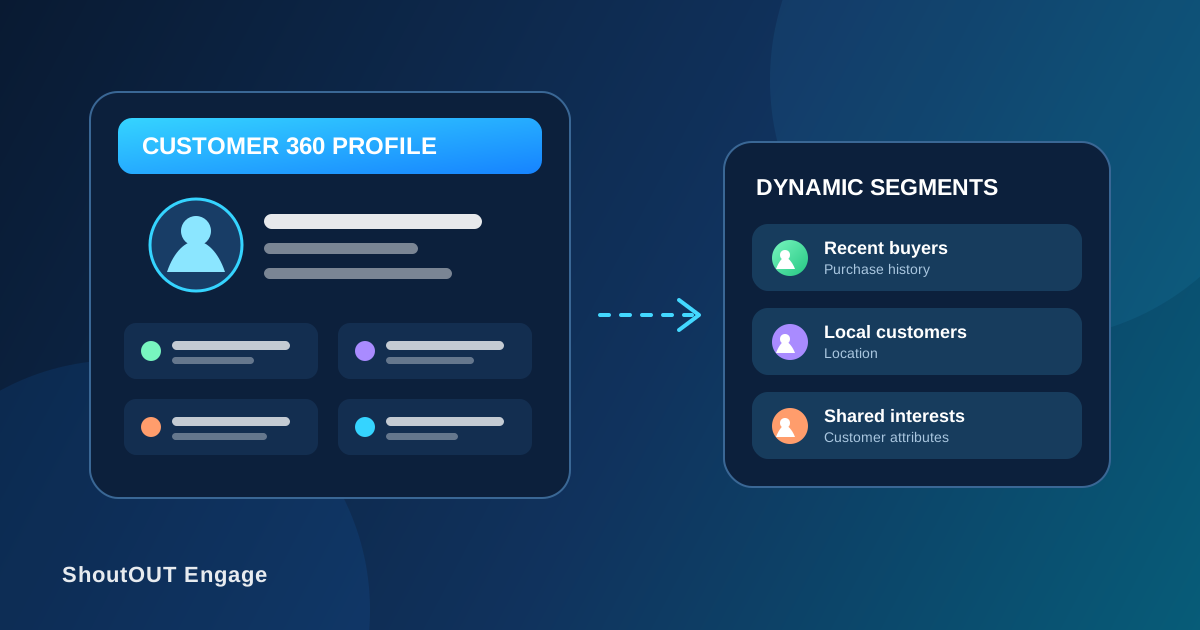
ShoutOUT Engage turns scattered customer data into something a marketing team can use. Its Customer 360 profile brings each customer’s attributes and activity into one view, while its dynamic segment builder groups customers by rules such as location, interests, purchase history, and other recorded actions. Together, they help teams understand an individual customer and activate that knowledge across relevant SMS and email campaigns.
The distinction matters. A profile answers, “What do we know about this person?” A segment answers, “Which customers match this campaign?” Using both creates a practical path from customer data to targeted communication without repeatedly sorting spreadsheets by hand.
What is a Customer 360 profile?
A Customer 360 profile is a unified record of the data ShoutOUT Engage holds about one customer. It gives a team one place to review customer attributes and activity instead of searching across disconnected files or systems. That consolidated view can reveal useful context such as purchase patterns, visit frequency, and customer value.
Customer data can enter ShoutOUT Engage through CSV or Excel uploads and API integration with an existing application. Bringing those sources together creates a clearer foundation for personalization and segmentation. Teams can inspect an individual profile and send an SMS from the profile when a one-to-one interaction is appropriate.
The Customer 360 profile is useful because segmentation depends on data quality and context. A rule such as “customers in Colombo who purchased recently” only works when location and purchase information are present and associated with the correct people. The profile makes that underlying information visible before a team builds or uses an audience.
How does the dynamic segment builder work?
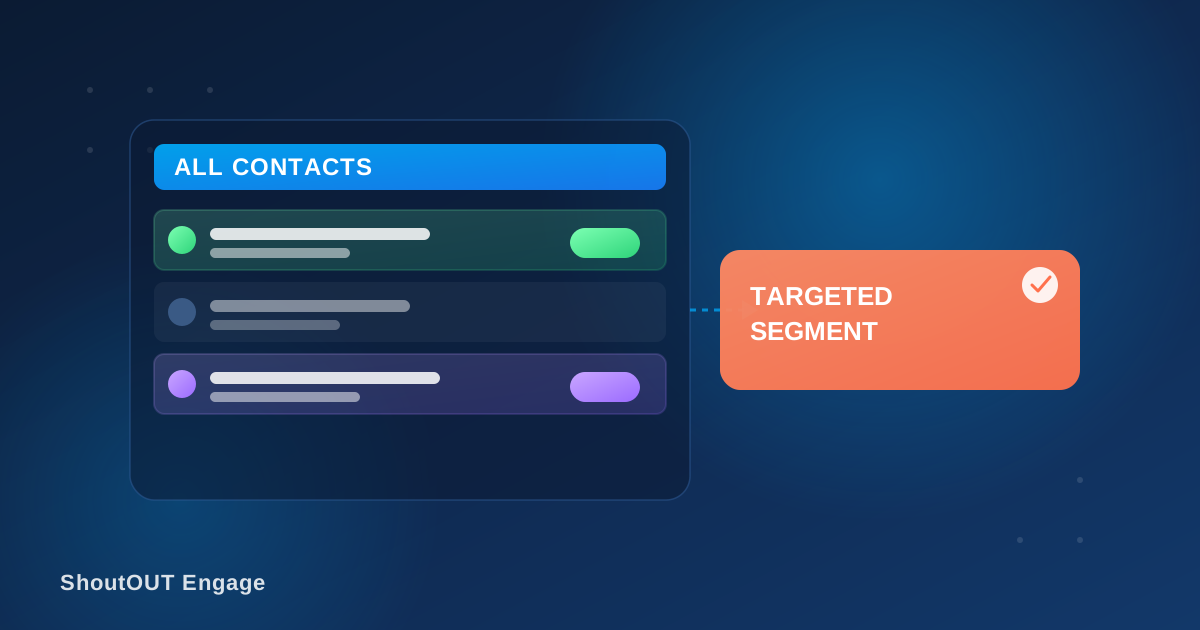
The dynamic segment builder groups customers whose data matches a chosen set of rules. ShoutOUT Engage can create segments from factors such as gender, interests, purchase history, location, and recorded customer actions. As the underlying customer data changes, the matching audience is recalculated so the segment stays current.
A marketer can define an audience around a campaign goal instead of creating a one-time contact list. For example, a retailer could build a segment for customers in a selected location who have purchased from a relevant category. When a customer begins or stops meeting those rules, segment membership can change with the data.
That makes a dynamic segment different from a static spreadsheet export. The rules remain the source of truth, reducing repetitive list preparation for recurring campaigns. For a closer look at audience filters and campaign use cases, read our guide to contact segmentation for targeted SMS campaigns.
How do Customer 360 profiles and segments work together?
Customer 360 profiles supply the individual records; the segment builder applies rules across those records. This connection lets teams move from understanding one customer to identifying a relevant audience at scale. The same centralized data can support individual outreach, reusable groups, personalization, and campaign targeting.
A simple workflow looks like this:
- Import existing customer data with a CSV or Excel file, or connect an application through the API.
- Review Customer 360 profiles to confirm which attributes and actions are available.
- Choose the conditions that describe the audience for a specific campaign.
- Save the rules as a dynamic segment that recalculates when customer data changes.
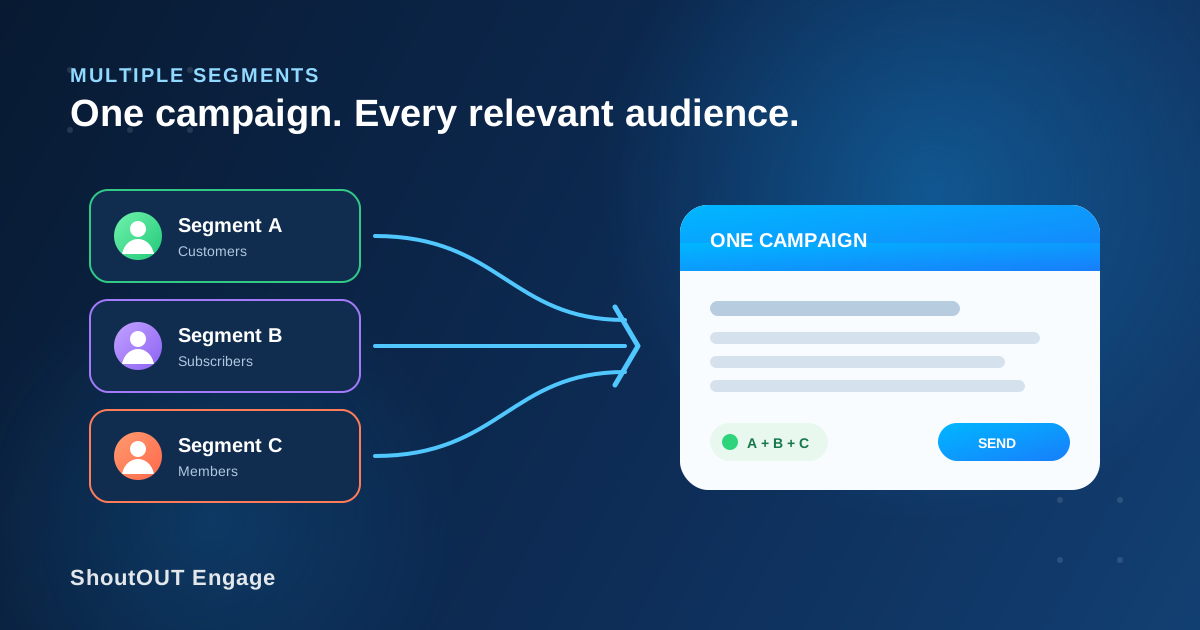
- Use the segment to target an SMS or email campaign with a relevant message.
This model also makes audience logic easier to explain internally. Rather than circulating an unexplained file of phone numbers, a team can describe the conditions behind an audience: location, behavior, purchase history, interests, or a combination of recorded data points.
What customer segments can a business create?
Useful customer segments connect an observable attribute or action to a clear communication goal. The right rules depend on the data a business collects, but ShoutOUT Engage supports the building blocks needed for several practical audience types.
- Location-based audiences: group customers by city, region, or another stored location field for local updates.
- Purchase-history audiences: reach customers whose recorded purchases match a product, category, or buying pattern.
- Interest-based audiences: use stored interests to make offers and content more relevant.
- Customer-action audiences: group people according to actions captured in their customer data.
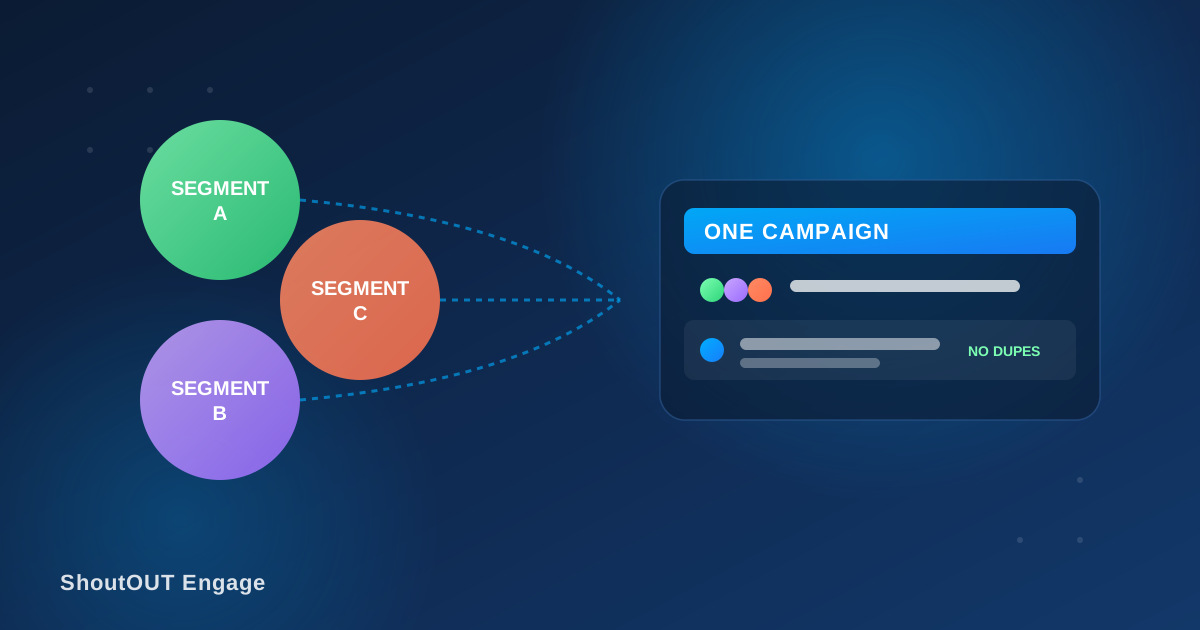
- Combined audiences: apply multiple conditions to narrow a broad contact base to the people who fit a campaign.
These are frameworks, not automatic guarantees of campaign performance. The segment builder helps a team define and maintain the intended audience; the offer, message, timing, data accuracy, and customer consent still shape the result.
Why use dynamic segments instead of static lists?
Dynamic segments reduce manual audience maintenance because membership is determined by rules rather than a frozen list. When customer information changes, the calculated segment can reflect the new data. This is especially useful for recurring communication where the intended audience changes between sends.
Static lists still have a role when a business needs a fixed historical record or a one-time import. But they become harder to manage as data changes. A customer moves, makes another purchase, or develops a new interest, yet the old spreadsheet remains the same. A dynamic segment keeps the selection logic attached to current customer records.
The broader benefit is relevance. Teams can avoid treating every contact as though they have the same history and needs. Instead, they can define an audience that fits the purpose of a campaign and use profile data to understand why each customer belongs in it.
How can you start using Customer 360 and segmentation?
Start with a small, trustworthy set of customer fields and one campaign question. Import the relevant data, inspect several profiles, and create a segment with rules that teammates can understand. A clear first segment is more valuable than a complicated one built on incomplete or inconsistent fields.
Before sending, verify that the segment returns the audience you expect and that your messaging follows the consent and privacy requirements that apply to your business. You can explore ShoutOUT Engage’s customer data capabilities on the Customer Data Platform page or create an account to begin organizing customer information.
FAQ
What information appears in a ShoutOUT Engage Customer 360 profile?
The profile displays the customer attributes and activity available in ShoutOUT Engage, including data brought in through CSV or Excel upload and API integration. The exact view depends on the information your business collects and sends to the platform.
Do ShoutOUT Engage segments update automatically?
Yes. Dynamic segments are recalculated as the underlying customer data changes, so membership reflects who currently matches the saved rules.
Which criteria can I use to build a customer segment?
ShoutOUT Engage can segment customers using recorded factors such as gender, interests, purchase history, location, and customer actions. Multiple conditions can be used to define a more specific audience.
Can I use customer segments for both SMS and email?
Yes. Centralized customer data and segments can support targeted SMS and email campaigns in ShoutOUT Engage.
How can I add customer data to ShoutOUT Engage?
You can upload customer information in CSV or Excel format or integrate an existing application through the API. The imported data then supports profiles, personalization, and segmentation.


 Capterra
 Software Advice
 G2 Crowd
 Gartner